
Depression and Sleep: Why you’re always tired.
When sleeping isn’t enough to make you feel rested, your mental health may be part of the picture.
Understanding the link between Depression and Sleep.
Depression and sleep problems often go hand in hand, creating a complex relationship that can significantly impact your daily life. It’s important to recognize that depression can lead to fatigue, insomnia, oversleeping, and low energy, each contributing to a persistent feeling of exhaustion.

Why am I always tired?
You might be familiar with this scenario: you’ve slept for a solid eight hours, woken up, had your coffee, yet you’re still plagued by tiredness. This situation might lead you to wonder, “Why am I so tired all the time?”
Fatigue has a multitude of potential causes, ranging from physical health conditions to stress, poor sleep, lifestyle factors, and mental health concerns. For some individuals, persistent tiredness might be linked to depression. Depression can affect both sleep and energy levels, creating a frustrating cycle where you continuously feel exhausted without feeling truly rested.
How does Depression affect sleep?
Depression manifests differently in everyone. Some individuals struggle to fall asleep or wake up multiple times during the night. Others may find themselves sleeping much longer than usual but still wake up feeling exhausted. Common changes associated with depression include:
- Difficulty falling asleep
- Waking during the night
- Waking too early
- Sleeping excessively
- Feeling tired throughout the day
- Low motivation
- Difficulty concentrating
- Feeling physically or emotionally slowed down
The interplay between sleep disruption and depression can exacerbate symptoms, making it crucial to address both when evaluating persistent issues.
The Depression–Sleep Cycle
Imagine this cycle:
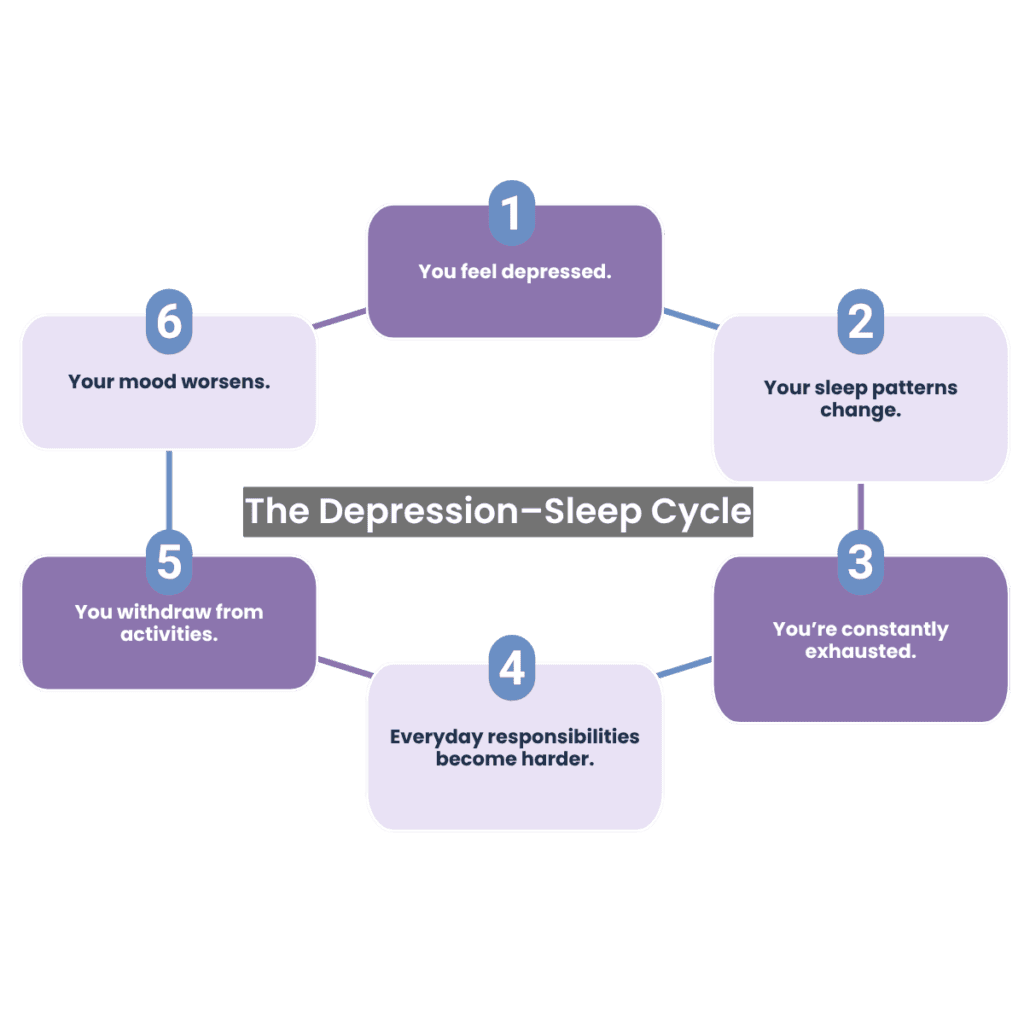
This cycle can perpetuate itself, making it clear that simply advising someone with depression to “get more sleep” may not address the root of the problem. Understanding why your sleep and mood have changed is key to breaking this cycle.
When tiredness is more than tiredness
It might be time to seek professional support if fatigue is accompanied by:
- Persistent sadness
- Loss of interest in activities once enjoyed
- Feelings of hopelessness
- Changes in appetite
- Difficulty concentrating
- Feelings of worthlessness or guilt
- Significant changes in sleep
- Thoughts about death or suicide
These symptoms can indicate depression and should be taken seriously. If you experience thoughts of suicide or feel you may be in immediate danger, seek emergency help or contact a crisis service immediately.
What can Heramba Mental Healthcare do to help?
At Heramba Mental Healthcare, we offer support to evaluate changes in mood, sleep, motivation, and energy. Our comprehensive approach includes:
- Comprehensive psychiatric evaluations
- Personalized treatment planning
- Medication management when appropriate
- Continued monitoring and support
You don’t have to keep telling yourself, “I’m just tired.” Sometimes, your exhaustion is your mind’s way of asking for help.
Take the First Step today
🌐www.herambamentalhc.com/contact-us
☎️ 888-867-0204
✉️info@herambamentalhc.com
Follow us on Social Media for daily mental health support and tips.